Reynolds and those who support him are pursuing the one objective he has always sought to establish, namely the sovereignty of the Aboriginal people over this country.
On reviewing the statements of the two Directors, Gower and Anderson, there appears to be a conflict over the facts. Gower said, “The resultant paper had a surprising finding about colonial military involvement. Not one instance was identified of a properly constituted and authorised colonial force — permanent or militia — having taken part in any activity. Rather, deaths resulted from the actions of settlers and police, or earlier detachments of the British garrison force.” Anderson appears to say “frontier conflict (between Aboriginals and settlers) as warfare”. Therefore, it’s within the scope of the 1980 Act.
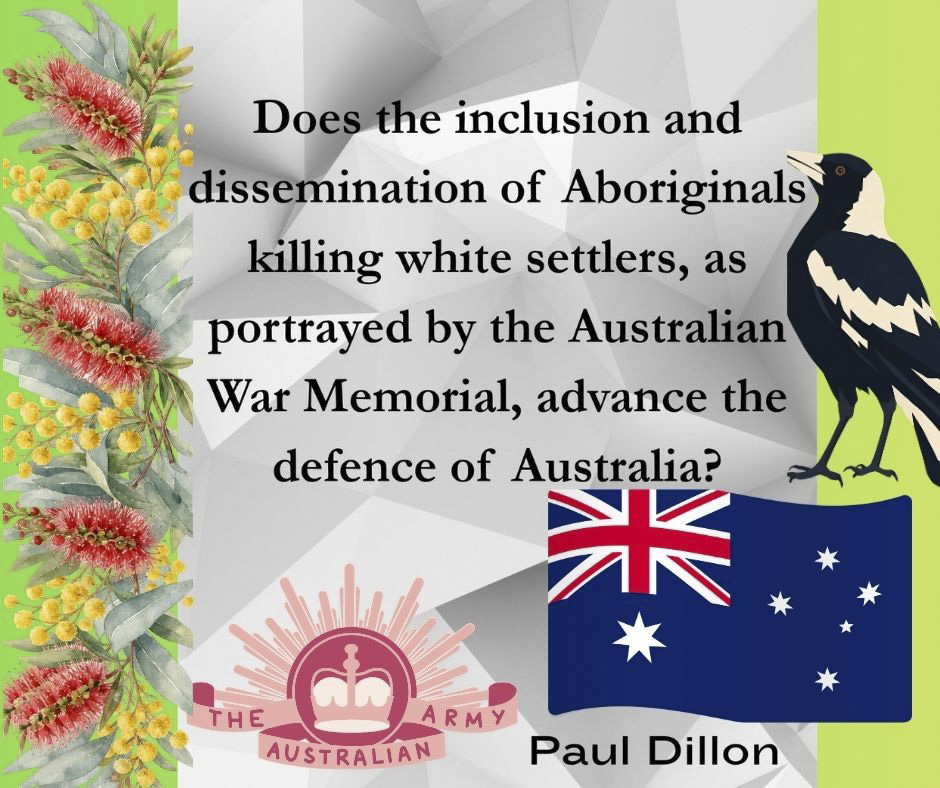
The question is not whether frontier violence occurred, but what that violence meant. The Australian War Memorial must resolve the conflict between Gower’s findings and Anderson’s views. If it accepts Reynolds, it is not merely acknowledging violence between settlers and Aboriginals but also Reynolds’ hypothesis of resistance by a sovereign nation. The Memorial must therefore explain not only why frontier violence falls within its statutory remit, but also how disseminating that interpretation advances the defence of Australia in the sense contemplated by Dixon CJ and the legislation establishing the institution.

